Die Iva Davies One-Man-Show, Blumenstrauß wird zum Iglu – Wenn es um Rockmusik geht, sind in erster Linie Nordamerika und Europa oft im Gespräch, aber gelegentlich auch Japan und Afrika. Aber was ist mit Tasmanien (Rob Tognoni), Neuseeland (Crowded House, Datsuns, The Veils) oder Australien.
Klammern wir mal die üblichen großen Namen aus über die permanent berichtet wird, AC/DC, Bee Gees, INXS, Man At Work, dann gibt es noch eine Vielzahl recht unbekannte dennoch gute Formationen. Die haben aber oft deutliche Spuren hinterlassen, die aber nicht direkt mit den drei großen Inseln auf der Südhalbkugel in Verbindung gebracht werden. Fangen wir diesmal mit einer bekannteren Rock-Band, sprich Icehouse an.
English Version: at the end of the post !! Englische Version: am Ende des Beitrag !!


Alles begann 1977 in Sydney, Ivor Arthur Davies (Gesang, Gitarre, Bass, Keyboards, Oboe) lernte während einer Teilzeitarbeit auf einem Squash-Platz über die Leiterin zufällig ihren Sohn Keith Welsh (Bass) kennen. Zusammen mit Michael Hoste an Keyboards und Don Brown am Schlagzeug gründen sie die Band Flowers. Man spielte erst einmal vorwiegend Cover-Versionen von Roxy Music, David Bowie, Lou Reed, T-Rex, Ultravox oder Brian Eno hauptsächlich in lokalen Clubs, baute damit mal eine ordentliche Anhängerschaft auf. Bereits Mitte 1979 ersetzte John Lloyd (Paul Kelly, The Dots) Don Brown, Anthony Smith kam für Michael Hoste. Der blieb aber mit der Band immer verbunden und trat ihr später wieder bei. Beim kleinen Label Regular Records erschien zuerst die Single Can’t Help Myself (Mai 1980), kurz danach im Oktober dann das recht erfolgreiche Debüt Icehouse. Es wurde 1980 eines der meistverkauften Alben in Australien. Iva Davies war die wichtigste kreative Kraft, vier der elf Lieder stammen von ihm und Michael Hoste (der unterstützte wieder als Gast an den Keyboards), er war Produzent, Gitarrist, die ruhige, sanfte aber durchaus prägende Stimme, ein echter klassischer Frontmann. Die weiteren Singles We Can Get Together (September) und Walls (Januar 1981) steigerten die Popularität der Blumen.
Sie waren Down Under in aller Munde, räumten in der Heimat reihenweise Preise ab. Sie unterschrieben Anfang 1981 beim Major Chrysalis Records, um dann auch einfacher weltweit durchstarten zu können. Aufgrund gesetzlicher Beschränkungen und um Verwechslungen mit einer schottischen Gruppe The Flowers zu vermeiden, ändern sie jedoch ihren Namen. Letzter Auftritt als Flowers am 27. Juni 1981 im Capitol Theatre Sydney, dann benennen sie sich um in Icehouse, eben nach ihrem ersten Titel ihres Debüts. Icehouse wurde von Iva Davies geschrieben als er in einer kalten, primitiven Wohnung eines alten, einsamen zweistöckigen Herrenhauses lebte. Mir hat die Musik, die beispielsweise wie das frühe Material von Simple Minds, Depeche Mode oder Roxy Music sehr modern-innovativ und starke Elektronikanteile hatte, von Beginn an sehr gut gefallen, Icehouse lief bei mir damals in Dauerrotation. SchoTTenTipp: Für den Komplettierer empfehle ich die Box-Ausgabe mit CD1: CD-Album Icehouse mit 3 zusätzlichen Bonus-Titel, CD2: Live Album, DVD: Live Sweetwaters Music Festival 1981 und diverse Musik-Videos (Diva Records, 2011). Sehr schöne, informative Ausgabe im achtseitigen Digipack.
Chrysalis veröffentlichte dann den größten Teil des Blumenstrauß-Material als selbstbetiteltes Album Icehouse, schickte damit die Synthie-Rock-Band Icehouse in der zweiten Hälfte 1981 um die ganze Welt auf Tour. Der erst einmal einzige neue Titel als Icehouse ist Love In Motion. Die Band trennte sich dann Ende 1981, Keith Welsh wurde später Manager der australischen Acts Do-Ré-Mi (1981 bis 1988: Deborah Conway, Dorland Bray, Helen Carter, Stephen Philip) und Boom Crash Opera (gegründet 1985, Melbourne). Der Nachfolger Primitive Man war im Januar 1982 dann praktisch ein Alleingang von Iva Davies. Zusammen mit Produzent Keith Forsey (später Giorgio Moroder, Simple Minds), der auch Perkussion beisteuert, entsteht ein Kracher-Album mit Hits wie Great Southern Land, Uniform, Hey Little Girl und Street Café. Auf der begleitenden Tour waren die Unterstützer Michael Hoste an Keyboards, Schlagzeuger John Lloyd, sowie Robert Kretschmer (Gitarren), Guy Pratt (Bass) und Andy Qunta (Keyboards). In dieser Besetzung wurde 1983 auch die EP Fresko eingespielt. Sie unterstützten David Bowie auf dem europäischen Teil seiner Serious-Moonlight-Tour. Bereits 1982 hatte Russell Mulcahy, er visualisierte auch Hits von Duran Duran, Talk Talk, Elton John, Queen, zwei ihrer Videoclips gedreht: Hey Little Girl und Street Café (veröffentlicht Februar 1983). Für seinen Thriller Razorback (1984) komponierte und spielte Iva Davies im Gegenzug dann die instrumentale Musik ein. Dabei setzte er auch den in Australien entworfenen Fairlight Music Computer ein. Iva Davies (1986): „Ich benutze seit zweieinhalb Jahren meistens den Fairlight, als eine Art Skizzenblock zum Arrangieren und Bearbeiten. Sie werden nicht weit entfernt von meinem Wohnort gebaut. Wenn sie also Software testen müssen, schaue ich sie mir an. Das erste Mal, als ich ein Fairlight verwendete, war das der Soundtrack zu Russell Mulcahy’s ersten Spielfilm Razorback, bei dem ein riesiges Killerschwein die Hauptrolle hat. Aber ich benutze auch den Prophet 5 für Harmonien.“


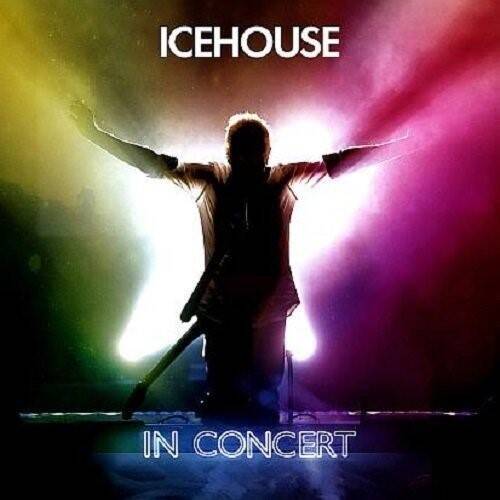
Das nächste etwas düsterere Album Sidewalk mit den Auskopplungen Taking The Town, Don’t Believe Anymore sowie Dusty Pages wurden allesamt 1984 veröffentlicht und erreichten wieder gute Chart-Positionen in Australien. Besetzung: Davies (Sampling-Synthesizer Fairlight CMI), Kretschmer, Pratt, Qunta und die beiden ehemaligen Mitgliedern Simon Lloyd (Saxophon, Trompete, Keyboards) und Steve Jansen (Schlagzeug, Percussion). Für die Sydney Dance Company (Graeme Murphy) komponiert, produziert und spielt Iva mit seinen bekannten Helfern das Album Boxes (1985) ein. Höhepunkte 1986: für das Album Measure For Measure unterstützt sogar Brian Eno als Gast und zum anderen ein Audio/Video-Mitschnitt eines Auftritts im New Yorker The Ritz. Das zeigt den Stellenwert, dass dieses Projekt Icehouse inzwischen genießt. Mit Man Of Colours, mit den Hit-Singles Crazy, Electric Blue (komponiert von John Oates), My Obsession, Man Of Colours und Nothing Too Serious, erscheint 1987 ein weiterer Karriere-Meilenstein, es wird das meistverkaufte Album der Band. Es war das erste australische Album mit fünf Singles in den Top 30, es blieb elf Wochen lang auf dem ersten Platz der australischen Album-Charts, hatte über 750.000 Verkäufe. Iva Davies war mit Eis-Haus in seiner Heimat am Zenit. Die Wahrnehmung in Europa und Nordamerika war ähnlich, nur nicht ganz so deutlich. Mit nur zwei Singles Touch The Fire und Jimmy Dean ließ es Davies dann bis 1990 etwas langsamer angehen.
Mit neuem Personal und dem ehrgeizigen, poppigen Code Blue (10-1990, ohne Andy Qunta) und den daraus ausgekoppelten Big Fun, Miss Divine und Anything Is Possible fing der leuchtende Stern der Australier an zu sinken, Platzierungen, Auszeichnungen nahmen ab. Nach langer kreative Pause, kommt aber mit Big Wheel (10-1993) und dem Remix-Doppeldecker Full Circle (12-1994) auf Davies Label Diva Records der Tiefpunkt. Iva Davies (2016): „Ich habe innerhalb von sechs Jahren das erfolgreichste australische Album und auch den größten Flop überhaupt veröffentlicht: Big Wheel von 1993. Die Reaktion des Musik-Marktes war ein Schlag ins Gesicht. Mein Publikum wollte nicht, dass ich mich weiterentwickle. Da ich zu der Zeit Vater wurde, habe ich mich aus der Industrie zurückgezogen und mich auf meine Tochter konzentriert.“ Auch eine Lösung, man braucht nur genug Ressourcen dazu. 1995 war Davies mit The Berlin Tapes erneut an der Sydney Dance Company beteiligt, diesmal mit ihrer Berliner Produktion. Zur Jahrtausendwende am Silvesterabend 1999 traten Icehouse zusammen mit dem The Sydney Symphony Orchestra auf dem nördlichen Vorplatz des Sydney Opera House mit dem Programm The Ghost Of Time auf, einer 25-minütigen Fassung von Great Southern Land. Ungefähr 2,5 Milliarden Menschen haben weltweit diese spektakuläre Live-Übertragung des Silvester-Feuerwerks gesehen. Die Musik wurde mit den weiteren Titeln Walk Alone und Endless Ocean auch als Davies-Solo-Werk veröffentlicht.
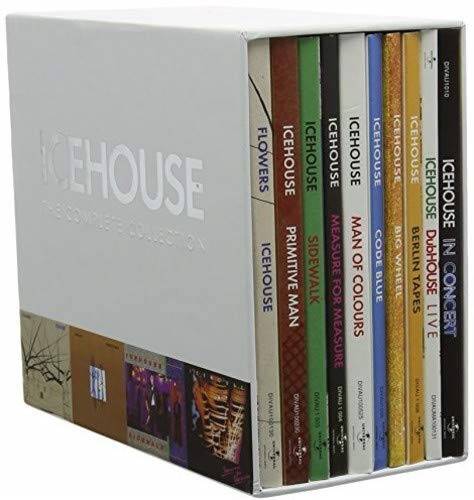


Ab 2001 arbeitet Iva Davies an einem neuen Album Bi-Polar Poems, einige Titel waren dann von 2004-2008 auf der Künstler-Webseite verfügbar. Dieses Album ist 2022 immer noch nicht veröffentlicht. Iva Davies (2008): „Wir haben ein paar private Firmenshows gespielt, aber was Live-Touren vor der Öffentlichkeit angeht, haben wir das schon lange nicht mehr gemacht. Um zwei Stunden singen zu können, müsste ich praktisch gesehen viel fitter sein als jetzt. Ich habe vor einiger Zeit ein Album komponiert und aufgenommen. Your God Not Mine wurde bereits 1998 geschrieben. Bi-Polar Poems ist in verschiedenen Zuständen unvollendet, aber ich bekomme immer wieder Projekte, die mich hindern daran weiter zu arbeiten.“ Zum 30-jährigen Jubiläum erscheint das Album Icehouse (siehe SchoTTenTipp) und eine Retrospektive White Heat: 30 Hits als DCD-DVD-Combo. Alle Alben der 80er werden 2012 als limitierte Editionen veröffentlicht. Seit Ende 1981 ist Icehouse eigentlich ein Solo-Projekt. Iva Davies (2016): „Wenn niemand mit einer Peitsche hinter mir steht, bin ich nicht besonders effizient. Ich kann nur unter echtem Druck kreativ arbeiten, und das habe ich lange genug getan. Ich war Teil der Maschinerie. Als sie ins Stocken geriet, war der Druck weg und ich habe mir dann lieber Wale angeschaut.“ Bilder: Promo, Cover, Text: Roland Koch
Iva Davies (1977 – heute): Lead-Gesang, Lead-Gitarre, Bass-Gitarre, Keyboards, Oboe
Paul Wheeler (1986 – heute): Schlagzeug, Percussion
Paul Gildea (1989 – heute): Gitarren, Hintergrundgesang
Steve Bull (1989 – heute): Bassgitarre, Hintergrundgesang
Glenn Reither (2007 – heute): Keyboards, Saxophon
Michael Paynter (2011 – heute): Keyboards, Gitarre
Icehouse: Live Westfalenhalle Dortmund 24-06-1984


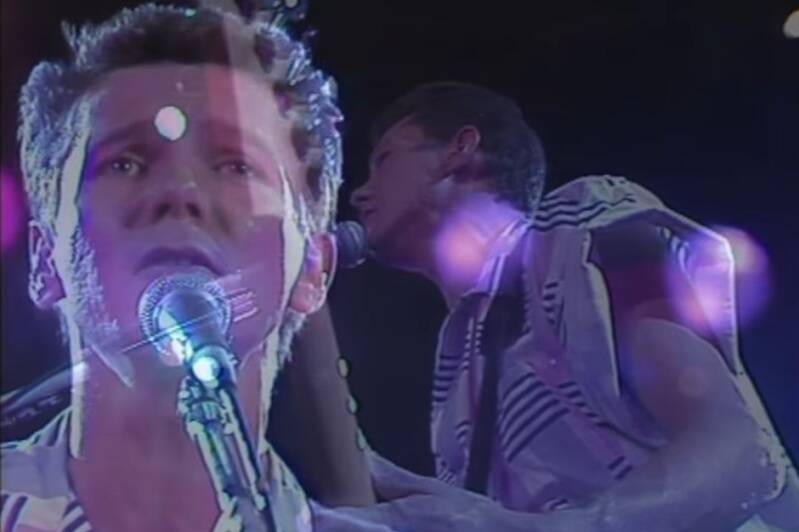
Flowers: Live Sweetwaters Music Festival 1981
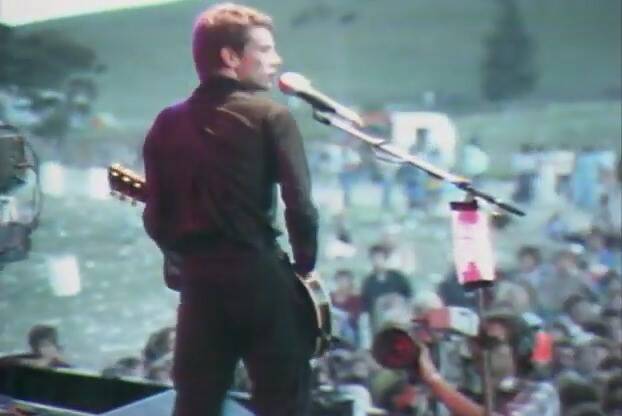

Ayers Rock: Flowers – Icehouse (AUS) – English Version
The Iva Davies One-Man Show, Bouquet of Flowers Becomes an Igloo – When it comes to rock music, North America and Europe are usually the first places people talk about, but occasionally Japan and Africa are also mentioned. But what about Tasmania (Rob Tognoni), New Zealand (Crowded House, Datsuns, The Veils), or Australia? Leaving aside the usual big names that are constantly in the news – AC/DC, Bee Gees, INXS, Man At Work – there are still a multitude of relatively unknown yet excellent bands. These bands have often left a distinct mark, though not one that's directly associated with the three major islands of the Southern Hemisphere. Let's start this time with a more well-known rock band: Icehouse.
It all began in Sydney in 1977. Ivor Arthur Davies (vocals, guitar, bass, keyboards, oboe) met Keith Welsh's son (bass) by chance through the manager of a squash court while working part-time. Together with Michael Hoste on keyboards and Don Brown on drums, they formed the band Flowers. Initially, they played mostly cover versions of songs by Roxy Music, David Bowie, Lou Reed, T. Rex, Ultravox, and Brian Eno, primarily in local clubs, building a decent following. By mid-1979, John Lloyd (Paul Kelly, The Dots) had replaced Don Brown, and Anthony Smith had taken over for Michael Hoste. Hoste, however, remained connected to the band and later rejoined. The single "Can't Help Myself" was released on the small label Regular Records in May 1980, followed shortly after in October by their quite successful debut album, *Icehouse*. It became one of the best-selling albums in Australia in 1980. Iva Davies was the main creative force; four of the eleven songs were written by him and Michael Hoste (who again contributed as a guest on keyboards). He was the producer, guitarist, and provided the calm, gentle, yet undeniably distinctive voice—a true classic frontman. The subsequent singles "We Can Get Together" (September) and "Walls" (January 1981) further increased the band's popularity.
They were the talk of the town Down Under, racking up awards back home. In early 1981, they signed with the major label Chrysalis Records to facilitate their international breakthrough. However, due to legal restrictions and to avoid confusion with a Scottish group called The Flowers, they changed their name. Their last performance as Flowers was on June 27, 1981, at the Capitol Theatre in Sydney, after which they renamed themselves Icehouse, after the first track from their debut album. Icehouse was written by Iva Davies while he was living in a cold, spartan apartment in an old, isolated two-story mansion. I loved their music from the start; it was very modern and innovative, with strong electronic elements, much like the early material of Simple Minds, Depeche Mode, or Roxy Music. Icehouse was on constant rotation for me back then. SchoTTenTipp: For the completist, I recommend the box set edition with CD1: CD album Icehouse with 3 additional bonus tracks, CD2: Live album, DVD: Live Sweetwaters Music Festival 1981 and various music videos (Diva Records, 2011). A very nice, informative edition in an eight-page digipak.
Chrysalis then released most of the material from *Blumenstrauß* as the self-titled album *Icehouse*, sending the synth-rock band Icehouse on a world tour in the second half of 1981. The only new track released under the Icehouse moniker was "Love In Motion." The band broke up at the end of 1981, and Keith Welsh later became the manager of the Australian acts Do-Ré-Mi (1981 to 1988: Deborah Conway, Dorland Bray, Helen Carter, Stephen Philip) and Boom Crash Opera (founded in 1985 in Melbourne). The follow-up album, *Primitive Man*, released in January 1982, was essentially a solo effort by Iva Davies. Together with producer Keith Forsey (later Giorgio Moroder of Simple Minds), who also contributed percussion, she created a smash-hit album with hits like "Great Southern Land," "Uniform," "Hey Little Girl," and "Street Café." On the accompanying tour, the backing musicians were Michael Hoste on keyboards, drummer John Lloyd, Robert Kretschmer (guitars), Guy Pratt (bass), and Andy Qunta (keyboards). This lineup also recorded the EP *Fresko* in 1983. They supported David Bowie on the European leg of his *Serious Moonlight* tour. As early as 1982, Russell Mulcahy, who also directed music videos for hits by Duran Duran, Talk Talk, Elton John, and Queen, had directed two of their music videos: "Hey Little Girl" and "Street Café" (released in February 1983). In return, Iva Davies composed and performed the instrumental music for his thriller *Razorback* (1984), using the Fairlight Music Computer, which was designed in Australia. Iva Davies (1986): “For the past two and a half years, I’ve mostly used the Fairlight as a kind of sketchbook for arranging and editing. They’re made not far from where I live, so when they need to test software, I take a look at it. The first time I used a Fairlight was for the soundtrack to Russell Mulcahy’s first feature film, Razorback, which stars a giant killer pig. But I also use the Prophet 5 for harmonies.”
The next, somewhat darker album, *Sidewalk*, featuring the singles "Taking The Town," "Don't Believe Anymore," and "Dusty Pages," was released in 1984 and again achieved good chart positions in Australia. The lineup consisted of Davies (Fairlight CMI sampling synthesizer), Kretschmer, Pratt, Qunta, and former members Simon Lloyd (saxophone, trumpet, keyboards) and Steve Jansen (drums, percussion). Iva composed, produced, and performed the album *Boxes* (1985) for the Sydney Dance Company (Graeme Murphy) with his familiar collaborators. Highlights of 1986 included Brian Eno as a guest on the album *Measure For Measure*, as well as an audio/video recording of a performance at The Ritz in New York. This demonstrates the status that Icehouse had achieved. With *Man of Colours*, featuring the hit singles "Crazy," "Electric Blue" (composed by John Oates), "My Obsession," and "Nothing Too Serious," another career milestone was released in 1987; it became the band's best-selling album. It was the first Australian album with five singles in the Top 30, remaining at number one on the Australian album charts for eleven weeks and selling over 750,000 copies. Iva Davies was at the peak of his success in his native Australia with *Eis-Haus*. The reception in Europe and North America was similar, though not quite as pronounced. With only two singles, "Touch the Fire" and "Jimmy Dean," Davies then slowed things down somewhat until 1990.
With new personnel and the ambitious, poppy Code Blue (October 1990, without Andy Qunta) and its singles Big Fun, Miss Divine, and Anything Is Possible, the Australians' shining star began to fade; chart positions and awards dwindled. After a long creative hiatus, however, the low point came with Big Wheel (October 1993) and the remix double album Full Circle (December 1994) on Davies' label Diva Records. Iva Davies (2016): "Within six years, I released the most successful Australian album and also the biggest flop ever: Big Wheel from 1993. The music market's reaction was a slap in the face. My audience didn't want me to evolve. Since I became a father at that time, I withdrew from the industry and focused on my daughter." That's one solution, too; you just need enough resources for it. In 1995, Davies was again involved with the Sydney Dance Company, this time with their Berlin production, The Berlin Tapes. On New Year's Eve 1999, at the turn of the millennium, Icehouse, together with The Sydney Symphony Orchestra, performed The Ghost of Time, a 25-minute version of Great Southern Land, on the north forecourt of the Sydney Opera House. Approximately 2.5 billion people worldwide watched this spectacular live broadcast of the New Year's Eve fireworks. The music, along with the tracks Walk Alone and Endless Ocean, was also released as a Davies solo work.
From 2001, Iva Davies worked on a new album, Bi-Polar Poems; some tracks were available on the artist's website from 2004 to 2008. This album remains unreleased as of 2022. Iva Davies (2008): "We played a few private corporate shows, but as far as live tours in front of the public are concerned, we haven't done that in a long time. To be able to sing for two hours, I'd practically have to be in much better shape than I am now. I composed and recorded an album some time ago. 'Your God Not Mine' was written back in 1998. Bi-Polar Poems is unfinished in various states, but I keep getting projects that prevent me from working on it further." For the 30th anniversary, the album Icehouse was released (see SchoTTenTipp), along with a retrospective, White Heat: 30 Hits, as a DVD/CD combo. All of her 80s albums were released as limited editions in 2012. Since the end of 1981, Icehouse has essentially been a solo project. Iva Davies (2016): “If no one is whipping me, I’m not particularly efficient. I can only work creatively under real pressure, and I did that for long enough. I was part of the machine. When it sputtered to a halt, the pressure was gone, and I preferred watching whales.” Images: Promo, Cover, Text: Roland Koch
Iva Davies (1977 – present): Lead vocals, lead guitar, bass guitar, keyboards, oboe
Paul Wheeler (1986 – present): Drums, percussion
Paul Gildea (1989 – present): Guitars, backing vocals
Steve Bull (1989 – present): Bass guitar, backing vocals
Glenn Reither (2007 – present): Keyboards, saxophone
Michael Paynter (2011 – present): Keyboards, guitar
Kommentar hinzufügen
Kommentare